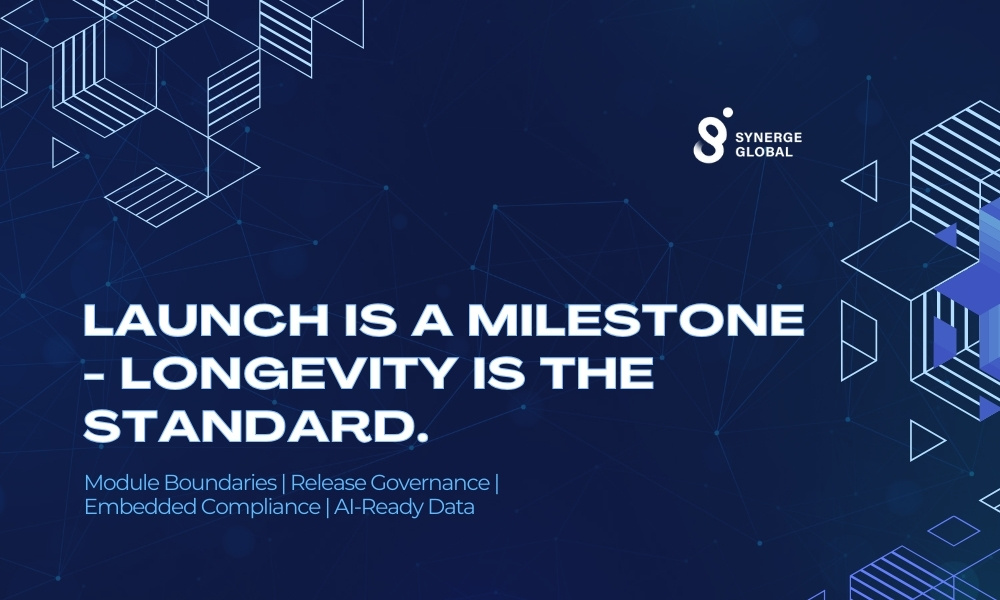
What Defines a High-Quality Enterprise Gaming Project in iGaming Platform Development?
From platform architecture and version governance to compliance frameworks and AI/data readiness, building a long-term technical foundation for scalable multi-market operations.
In enterprise gaming projects, “on-time delivery” and “meeting functional requirements” are only the baseline. What truly determines the value of a project often emerges three to five years after launch:
Can the system be sustainably maintained?
Can it support multi-market operations and ongoing product adjustments?
When regulatory or market conditions change, are modification costs still manageable?
A well-executed project is not merely a delivered product—it is a technical foundation capable of adapting to change. For teams serving the gaming and online entertainment industries, designing with these long-term conditions in mind from the outset has become essential.
👉 Related Reading: iGaming Platform Development Services
Platform Architecture and Modular Boundaries Define Long-Term Scalability
Platform architecture and modular boundaries are the first critical factor. Without clear service segmentation and interface design, enterprise gaming systems can quickly evolve into tightly coupled monolithic structures as new requirements accumulate.
A more sustainable approach is to decompose the platform from the beginning into independently evolvable modules, such as:
- Game engine and content management
- Operations and marketing tools
- Rules and risk management systems
- Reporting and observability frameworks
These modules are then integrated through consistent API design and event-driven models.
This structure allows new features and third-party services to be integrated within clearly defined boundaries, while minimizing the risk of system-wide impact from localized changes.
👉 Learn more about platform architecture and system integration
Version and Environment Governance Ensure Operational Control Across Markets
Version and environment governance play a crucial role in maintaining system stability as operations scale across multiple markets.
A robust setup typically includes:
- Clear separation between testing, staging, and production environments
- Traceable version control mechanisms
- Structured management of multi-market and multi-client configurations
For platforms serving multiple regions, this also enables market- or brand-specific variations to be handled through configuration and rule-based logic, rather than splitting into multiple system branches that are difficult to maintain.
This approach not only shortens deployment and iteration cycles but also reduces long-term maintenance complexity and technical debt.
Compliance and Responsibility Must Be Built Into the System
Another key factor is whether compliance and responsibility mechanisms are embedded into the system architecture, rather than added as afterthoughts.
Regulatory requirements, responsible gaming policies, and player protection standards are increasingly formalized into:
- Data recording obligations
- Reporting structures
- Operational constraints and safeguards
If these requirements are addressed through additional modules or manual processes, they become difficult to maintain and challenging to justify externally.
A more effective approach is to integrate:
- Behavioral tracking and operational logs into the data structure
- Predefined audit trail mechanisms
- Rule- and parameter-based controls for constraints and alerts
This allows the system to respond to regulatory changes through configuration and workflow adjustments, rather than repeated code modifications—while also strengthening the platform as a component of brand trust.
AI and Data Readiness Should Be Considered from Day One
Finally, AI and data capabilities should be planned from the early stages of the project, rather than added at the end.
Whether used to:
- Analyze regulatory and market data
- Detect anomalies and risk patterns
- Support operational and product decision-making
The effectiveness of AI depends on the availability of a well-structured data foundation.
This includes:
- Consistent behavioral event logging
- Clearly defined data fields and event structures
- Interfaces and monitoring mechanisms for model input and output
When these elements are incorporated during system design, AI and data tools can be introduced progressively in the future—without disrupting the existing architecture.
👉 Explore more industry insights and technology trends on LinkedIn
At Synerge Global, the internal standard for a “high-quality enterprise gaming project” goes beyond short-term delivery. It must withstand the test of time and evolving market conditions:
- Clear architecture and modular boundaries
- Controlled version and environment governance
- Compliance and responsibility embedded within system design
- Readiness for AI and data-driven capabilities
For companies aiming to scale across multiple markets, such a project is not a one-time investment—it is a long-term, evolving technical asset aligned with business strategy.
Disclaimer: The information provided herein reflects general industry knowledge and does not constitute legal or regulatory advice.